
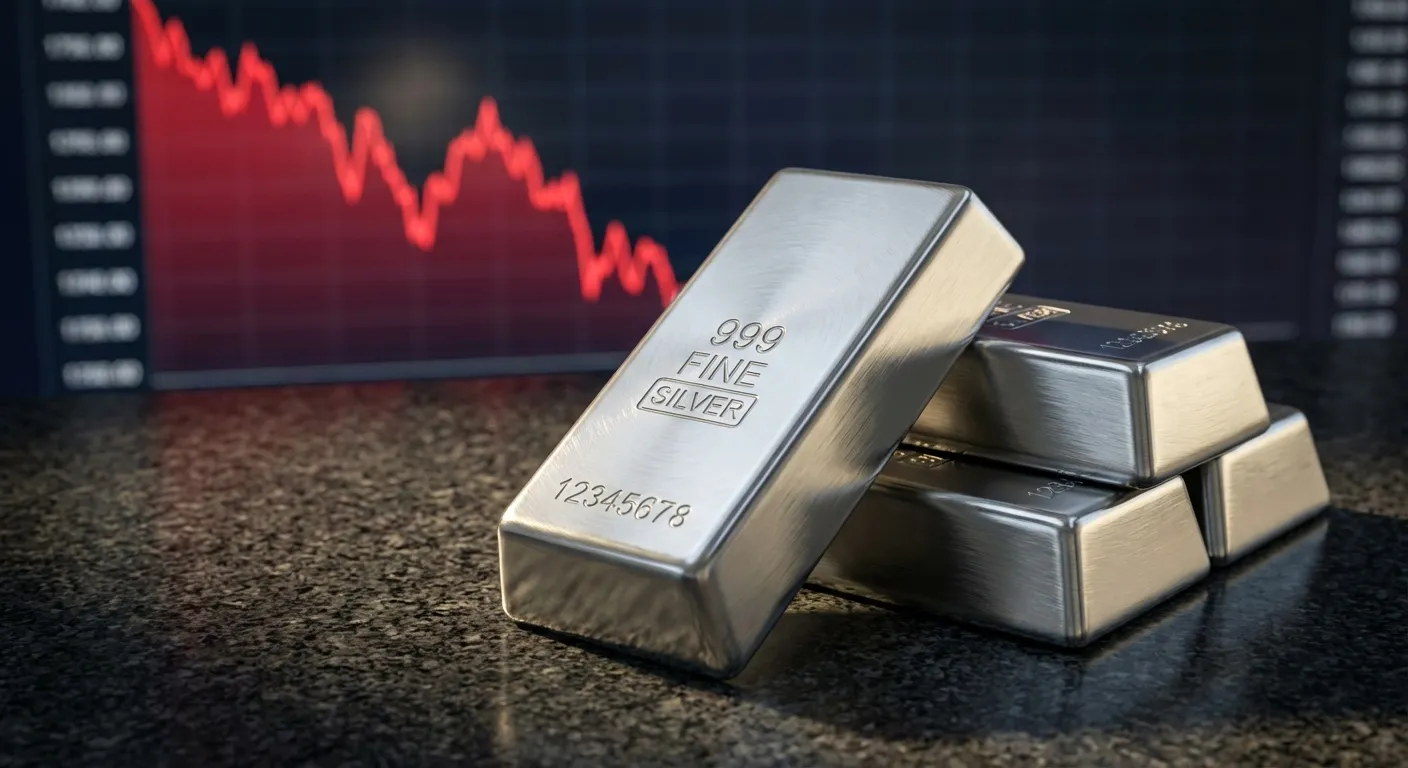
Silver made history twice this week. First by hitting $120 per ounce — an all-time high. Then by crashing 35% in a single day, the largest drop on record.
After surging 60% in just one month, silver plunged from $120 to around $85 — a stunning 30% drop. The crash was triggered by news of Trump's Federal Reserve nomination and aggressive margin requirement increases by exchanges.
The Fundamentals Haven't Changed
Despite the dramatic price action, silver's supply-demand picture remains extremely tight:
- Fifth consecutive year of market deficit (COMEX vaults are running dry)
- 95+ million ounce annual shortfall
- Industrial demand at record highs — driven by solar panels, EVs, and AI (now a U.S. critical mineral with a proposed price floor)
- Mine production declining since 2016
The crash was driven by leveraged traders being forced out — not a change in fundamentals. Our COVID crash comparison shows this exact pattern played out in March 2020. For deeper analysis, see our report on the silver supply crisis at COMEX.
Key Point: Physical silver holders weren't forced to sell. Only paper traders on margin got liquidated.
What This Means for Bahrain
The impact is already visible locally. Silver 1KG bars reached 1,750 BD at peak and are now trading in the 1,400 BD range — reflecting significant premiums on physical metal as global demand surges.
For local investors, this pullback offers advantages:
- ~350 BD savings per kilo compared to last week's peak
- No VAT on investment silver in Bahrain
- Physical ownership — no margin calls, no forced selling
Bank of America still maintains long-term silver targets of $135-$309 per ounce. The structural bull market remains intact.
Check Silver Prices
View live 1KG silver bar prices with free delivery across Bahrain
View Silver Prices →Disclaimer: This article is for informational purposes only and does not constitute financial advice. Silver prices are volatile. Please conduct your own research.