
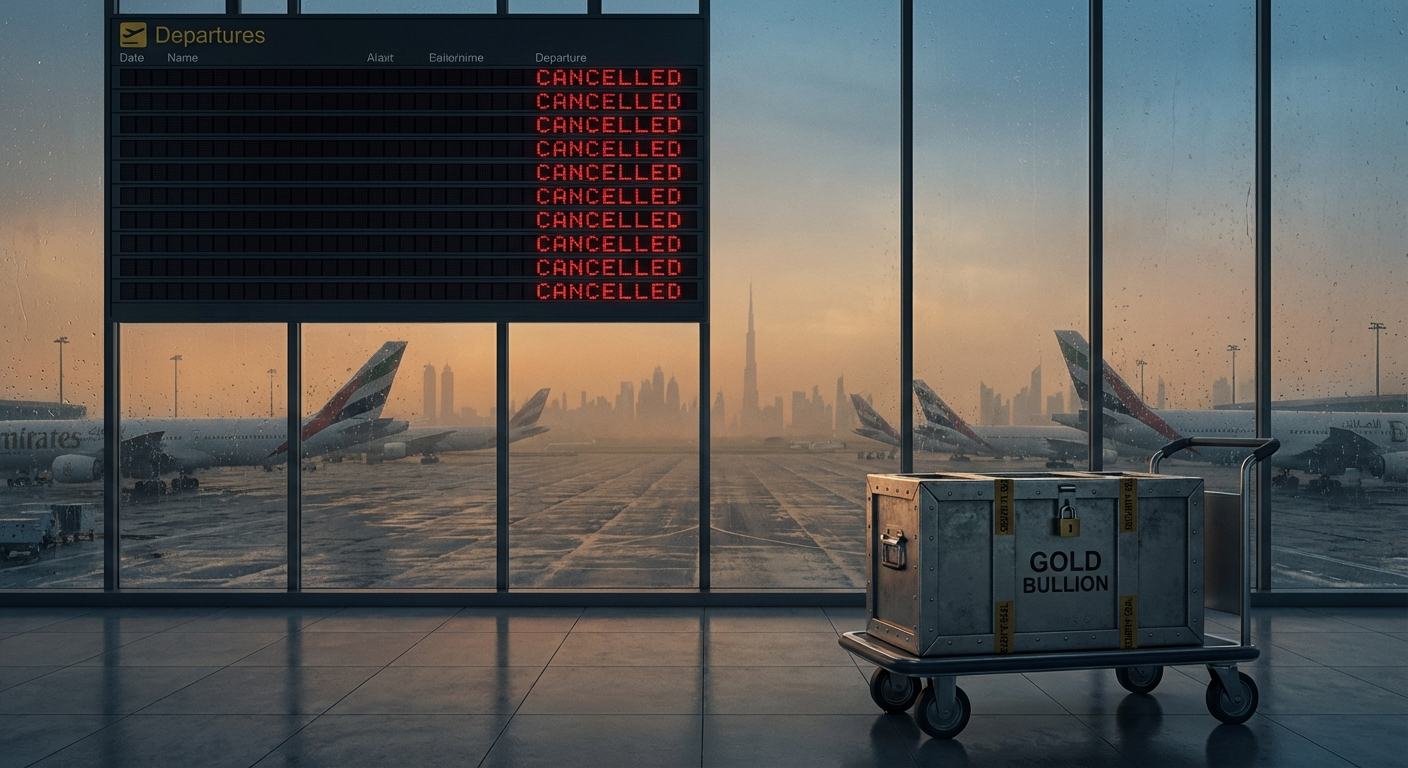
GCC Airspace Closed: What It Means for Gold Supply in Bahrain
Flights are grounded across the Gulf. Gold travels in the cargo holds of those flights. Bahrain's gold supply chain has just been cut off.
The Skies Are Empty
On February 28, 2026, the Gulf went dark. Eight countries simultaneously closed their airspace — Iran, Israel, Iraq, Jordan, Qatar, Bahrain, Kuwait, and the UAE — triggering what aviation analysts are calling the worst travel chaos since Covid. Syria closed its southern airspace along the Israeli border, and Saudi Arabia imposed partial flight restrictions.
The numbers were staggering from day one:
- 24% of all flights to the Middle East were cancelled on the first day
- ~50% of flights to Qatar and Israel were cancelled
- ~28% of flights to Kuwait were cancelled
- Over 1,700 flights cancelled in the first few days alone
Airlines grounded include Emirates, flydubai, Etihad, Qatar Airways, Kuwait Airways, Turkish Airlines, Air France, British Airways, Lufthansa, Cathay Pacific, Japan Airlines, and more than 20 other carriers. As of March 7, airspace remains closed or severely restricted across most of the Gulf.
"Passengers and airlines can expect airspace to be shut for quite some time in the region."
The UAE has opened limited emergency corridors for repatriation flights only since early March — but these are not regular commercial operations. Normal cargo and passenger routes remain suspended.
8-Country Airspace Closure
Iran, Israel, Iraq, Jordan, Qatar, Bahrain, Kuwait, and UAE simultaneously close airspace. 24% of Middle East flights cancelled in 24 hours.
Aviation Chaos Deepens
1,700+ flights cancelled. Airlines reroute long-haul flights around the Gulf, adding hours to journeys. Gold and silver shipments halt entirely.
Bloomberg Reports Gold Stranded in Dubai
Bloomberg publishes: "Gold Shipments Stranded in Dubai as Iran War Grounds Flights." Dubai traders offer gold at $30/oz discount to London — unable to move inventory.
Airspace Still Closed
UAE opens emergency corridors for repatriation only. Normal commercial operations remain suspended. No timeline for resumption.
Gold Flies in Passenger Jets
Most people assume that gold bullion travels in armoured trucks or dedicated cargo freighters. The reality is more surprising — and more relevant to the current crisis.
The vast majority of physical gold bars and silver bullion are transported in the cargo holds of ordinary commercial passenger aircraft. When you board a flight from Dubai to Bahrain, London to Dubai, or Zurich to Singapore, there is often gold stowed below your feet in the freight hold alongside luggage.
This is standard practice because passenger aircraft offer several advantages for high-value cargo:
- Frequency: Hundreds of passenger flights operate daily on key gold trade routes, providing regular shipment windows
- Security: Commercial airports have strict security protocols that protect all cargo on board
- Speed: Passenger flights are faster and more frequent than dedicated freighters on most routes
- Cost efficiency: Sharing the aircraft with passengers makes freight rates competitive
The critical implication: When commercial passenger flights stop, gold shipments stop. There is no separate gold supply chain that can simply bypass grounded passenger aviation. The two are deeply intertwined.
The GCC airspace closure has not just grounded people — it has physically halted the movement of gold across one of the world's most important bullion trade corridors.
Dubai: The World's Gold Hub Is Grounded
Dubai is not merely a transit point for gold — it is the central node of the global gold trade. The Dubai Multi Commodities Centre (DMCC) processes and re-exports billions of dollars in gold annually. Gold arrives in Dubai from Swiss refineries, UK vaults, and African mines — and from there, it flows outward to Asia, India, Bahrain, and the rest of the Gulf.
With the airspace closed, that entire system has seized up.
"Gold Shipments Stranded in Dubai as Iran War Grounds Flights"
The consequences are playing out in real time:
- $30/oz discount: Dubai traders are offering gold at $30 below the London spot benchmark — a desperate attempt to move stuck inventory before storage and financing costs eat into margins
- Mounting carrying costs: Gold sitting idle in Dubai vaults incurs storage fees and financing interest. Every day the flights don't fly, the cost of holding that gold rises
- Logistics costs surged 60–70%: Refiners report logistics costs rising 60–70% for gold contracts requiring delivery outside the Middle East
- India supply chain disrupted: MMTC-PAMP, India's largest gold refinery, sources approximately 10% of its doré (raw gold) from Middle Eastern mines — that supply is now cut off
The paradox is stark: Dubai is sitting on too much gold it cannot move, while the regions that import from Dubai — including Bahrain — are facing a potential supply crunch.
Global Supply Chain at Risk
The Metals Focus consultancy has warned that India — which has ample gold stocks for now — could face problems "if this drags on for months." India is the world's second-largest gold consumer. If a country with India's scale faces supply pressure, the ripple effects for smaller markets like Bahrain are likely to be more acute and arrive sooner.
What This Means for Bahrain: The Double Blockade
Bahrain's situation is unique — and particularly acute — because of geography and the way its gold supply chain is structured.
Air: The Primary Import Route Is Severed
The majority of gold bars sold in Bahrain are imported by air from Dubai and the UAE. This is the standard logistics route: gold is sourced from Dubai's trading hub and flown to Bahrain International Airport on regular commercial passenger flights. With Bahrain's own airspace closed and UAE airspace restricted to emergency corridors only, that route is completely shut down.
Sea: The Backup Route Is Also Blocked
What makes Bahrain's position especially exposed is that the Strait of Hormuz — the maritime chokepoint that connects the Gulf to the global ocean shipping network — is also closed. This eliminates the secondary logistics route that might otherwise compensate for the grounded flights.
Double blockade: No air imports. No sea imports. Bahrain is an island nation in the middle of a conflict zone, and both of its primary gold import routes have been simultaneously cut off.
Existing Inventory Is Finite
Gold dealers in Bahrain — including MSS Gold — hold inventory. But that inventory is finite. As customers buy physical gold (a natural response to the current geopolitical and economic environment), stock depletes. Under normal conditions, regular flights from Dubai replenish supply continuously. That replenishment mechanism no longer exists.
Once existing stock sells, there is no resupply until commercial flight operations normalise and the Strait of Hormuz reopens. The timeline for either of those developments remains uncertain.
The Premium Dynamic
Here is the counterintuitive situation unfolding right now:
- International gold spot price has pulled back to approximately $5,078–$5,100 per ounce, down from the $5,300+ peak immediately after the Iran strikes
- In Dubai, gold trades at a $30/oz discount — there's too much stuck there
- In Bahrain and other regions cut off from supply, physical gold is increasingly scarce — which means the gold you can actually hold in your hand may command a premium above the international spot price
This is how physical gold markets work when supply chains break: the spot price (a paper/derivatives market number) can diverge significantly from the price of real, deliverable gold in a specific location.
The Case for Physical Gold You Already Hold
If you hold physical gold bars in Bahrain today, you are in possession of an asset that just became measurably scarcer. Not in a theoretical or abstract sense — literally scarcer, because the supply chain that delivers new gold to this market has been severed.
What Scarcity Means for Existing Holders
Scarcity in physical markets has predictable effects. When supply is constrained and demand remains steady or increases (as it does during periods of geopolitical instability), prices for available physical stock tend to rise above the benchmark price. Gold dealers who still have inventory can charge a premium — and buyers, facing no alternative, will pay it.
For those who bought gold before the current crisis, this means:
- Your physical gold is worth the international spot price — but may be worth more in the local market where supply is constrained
- The gold you hold cannot be replicated quickly — no new bars can arrive in Bahrain until logistics routes reopen
- You hold a scarce, portable, internationally-recognised store of value in a period of significant regional instability
The Long View
Even setting aside the immediate supply disruption, the broader case for gold remains intact. The crisis that caused the airspace closure — geopolitical conflict in the Middle East — is itself a major driver of safe-haven gold demand. The same event that cut off the supply of new gold to Bahrain is also the event that makes holding gold more valuable.
The asymmetry is notable: Holders of physical gold in Bahrain face the airspace closure as a supply-side constraint that benefits them. Buyers who haven't yet acquired gold face it as a barrier to entry. The time to accumulate physical gold is before supply chains break — not after.
Frequently Asked Questions
Can I still buy gold in Bahrain?
Yes — for now. Existing dealer inventory is still available for purchase. However, because Bahrain's airspace is closed and no new gold shipments can arrive from Dubai, current stock is finite. Once inventory depletes, there is no resupply until commercial flights resume. Check our live prices page for current rates, or contact us on WhatsApp to check availability before visiting.
Why is Dubai selling gold at a discount if there's a shortage?
Dubai has a surplus of physical gold it cannot move. Normally, Dubai re-exports gold to Bahrain, India, and Asia via cargo holds on passenger flights. With those flights grounded, gold is piling up in Dubai's vaults. Traders are offering it at a $30/oz discount just to cover storage and financing costs — while importing regions like Bahrain face a potential shortage. It's a tale of two markets: surplus where the gold is, shortage where it needs to go.
Will gold prices go up in Bahrain because of the supply shortage?
International gold spot prices have pulled back to around $5,078–$5,100 per ounce from the $5,300+ post-strike peak. However, physical gold in supply-constrained regions like Bahrain could command a premium above spot. When supply chains break, local physical prices can diverge from global benchmark prices. The longer the airspace stays closed, the greater the potential divergence.
When will GCC airspace reopen and gold shipments resume?
As of early March 2026, airspace remains closed or highly restricted across most Gulf countries. Aviation experts state that "passengers and airlines can expect airspace to be shut for quite some time in the region." There is no confirmed timeline. Gold shipments to Bahrain depend on the restoration of normal commercial flight schedules — which in turn depends on the resolution of the underlying geopolitical conflict.
Related Articles
- The US Just Struck Iran — Gold Surged $200 in Hours — The strikes that started it all and sent gold past $5,300
- The Strait of Hormuz Just Shut Down — What It Means for Oil and Gold — Oil surging to $94, the sea route is blocked too
- Trump's 15% Tariff Just Pushed Gold Past $5,200 — The tariff backdrop compounding with the war premium
- Gold Investment Guide — Everything you need to know about buying gold in Bahrain
Check Live Prices — Contact Us for Current Availability
Gold supply to Bahrain is constrained. Check our live prices and reach out on WhatsApp to confirm stock before visiting. We'll give you an honest answer on what we have.
View Live Prices → WhatsApp for Availability →
إغلاق المجال الجوي الخليجي: ماذا يعني لإمدادات الذهب في البحرين؟
الرحلات متوقفة في كل أرجاء الخليج. والذهب يُنقل في أمتعة تلك الرحلات. سلسلة إمداد الذهب إلى البحرين انقطعت فجأة.
السماء فارغة
في ٢٨ فبراير ٢٠٢٦، أغلق الخليج سماءه. ثمانية دول أغلقت مجالها الجوي في آنٍ واحد — إيران، إسرائيل، العراق، الأردن، قطر، البحرين، الكويت، والإمارات — مما أطلق موجة من الفوضى الجوية وصفها المحللون بأنها الأسوأ منذ جائحة كوفيد. وأغلقت سوريا مجالها الجوي الجنوبي على الحدود الإسرائيلية، فيما فرضت المملكة العربية السعودية قيوداً جزئية على الطيران.
الأرقام كانت صادمة من اليوم الأول:
- ٢٤٪ من جميع الرحلات إلى الشرق الأوسط أُلغيت في اليوم الأول
- نحو ٥٠٪ من رحلات قطر وإسرائيل أُلغيت
- نحو ٢٨٪ من رحلات الكويت أُلغيت
- أكثر من ١,٧٠٠ رحلة ملغاة في الأيام الأولى فقط
"يمكن للمسافرين وشركات الطيران أن يتوقعوا إغلاق المجال الجوي لفترة طويلة إلى حد ما في المنطقة."
فتحت الإمارات ممرات طوارئ محدودة لرحلات إعادة المواطنين منذ مطلع مارس — لكنها ليست عمليات تجارية عادية. الرحلات التجارية العادية والبضائع لا تزال معلقة.
الذهب يسافر على متن طائرات الركاب
يعتقد كثيرون أن سبائك الذهب تُنقل في شاحنات مدرعة أو طائرات شحن مخصصة. الواقع مختلف تماماً — وأكثر ارتباطاً بالأزمة الحالية.
الغالبية العظمى من سبائك الذهب الفيزيائية تُنقل في عنابر الشحن أسفل مقاعد الركاب في الطائرات التجارية العادية. عندما تستقل رحلة من دبي إلى البحرين، أو من زيورخ إلى سنغافورة، كثيراً ما يكون هناك ذهب مخزن تحت قدميك في عنبر البضائع.
الدلالة الحاسمة: حين تتوقف الرحلات التجارية، تتوقف شحنات الذهب. لا توجد سلسلة إمداد منفصلة للذهب يمكنها تجاوز الطيران الجوي المتوقف. الاثنان مرتبطان ارتباطاً وثيقاً.
دبي: مركز الذهب العالمي متوقف
دبي ليست مجرد نقطة عبور للذهب — بل هي العقدة المركزية في تجارة الذهب العالمية. يصل الذهب إلى دبي من المصافي السويسرية، والخزائن البريطانية، والمناجم الأفريقية — ومنها يتدفق نحو آسيا والهند والبحرين وبقية دول الخليج.
"شحنات الذهب محاصرة في دبي مع توقف الرحلات بسبب الحرب مع إيران"
- خصم ٣٠ دولار للأوقية: تجار دبي يبيعون الذهب بـ ٣٠ دولاراً أقل من السعر العالمي — في محاولة يائسة لتحريك المخزون المحاصر قبل أن تلتهم تكاليف التخزين والتمويل الأرباح
- ارتفاع تكاليف اللوجستيك بـ ٦٠-٧٠٪: تكاليف الشحن ارتفعت بشكل حاد لعقود توريد الذهب خارج الشرق الأوسط
- سلسلة إمداد الهند مضطربة: مصفاة MMTC-PAMP الهندية الكبرى تستورد نحو ١٠٪ من ذهبها الخام من مناجم الشرق الأوسط — وهذا الإمداد انقطع الآن
المفارقة صارخة: دبي تجلس فوق ذهب لا تستطيع تحريكه، بينما المناطق التي تستورد منها — كالبحرين — تواجه أزمة إمداد محتملة.
ماذا يعني هذا للبحرين: الحصار المزدوج
وضع البحرين مميز وحرج بشكل خاص بسبب جغرافيتها وطريقة هيكلة سلسلة إمداد الذهب إليها.
الجو: طريق الاستيراد الرئيسي مقطوع
غالبية سبائك الذهب المباعة في البحرين تُستورد جواً من دبي والإمارات. مع إغلاق مجال البحرين الجوي وقصر مجال الإمارات على ممرات الطوارئ، هذا الطريق مغلق تماماً.
البحر: الطريق الاحتياطي مغلق أيضاً
مضيق هرمز — الممر البحري الذي يربط الخليج بشبكة الشحن المحيطي العالمية — مغلق كذلك. هذا يلغي الطريق الثانوي الذي ربما عوّض عن الرحلات الجوية المتوقفة.
حصار مزدوج: لا استيراد جوي. لا استيراد بحري. البحرين جزيرة في منطقة نزاع، وكلا طريقي استيراد الذهب الرئيسيين مقطوعان في الوقت ذاته.
المخزون الحالي محدود
تجار الذهب في البحرين — بما فيهم MSS Gold — لديهم مخزون. لكن هذا المخزون محدود. مع شراء العملاء للذهب الفيزيائي (وهو رد فعل طبيعي في ظل الأوضاع الجيوسياسية الراهنة)، يتناقص المخزون. في الأوضاع العادية، تجدد الرحلات القادمة من دبي الإمدادات بشكل مستمر. هذه الآلية التجديدية لم تعد موجودة الآن.
ديناميكية العلاوة السعرية
- السعر العالمي للذهب تراجع إلى حوالي ٥,٠٧٨–٥,١٠٠ دولار للأوقية من ذروة ٥,٣٠٠+ دولار
- في دبي، يُباع الذهب بـ ٣٠ دولاراً أقل من السعر العالمي — هناك فائض محاصر
- في البحرين والمناطق المقطوعة عن الإمداد، الذهب الفيزيائي يزداد ندرة — مما يعني أن الذهب الذي يمكنك حمله فعلاً قد يُباع بـعلاوة فوق السعر العالمي
حجة الذهب الفيزيائي الذي تمتلكه بالفعل
إذا كنت تحتفظ بسبائك ذهب فيزيائية في البحرين اليوم، فأنت تمتلك أصلاً بات أكثر ندرة بشكل ملموس. ليس بالمعنى النظري المجرد — بل بشكل حرفي، لأن سلسلة الإمداد التي تجلب الذهب الجديد إلى هذا السوق قد انقطعت.
- ذهبك الفيزيائي يساوي السعر العالمي — لكنه قد يساوي أكثر في السوق المحلية حيث الإمداد محدود
- الذهب الذي تحمله لا يمكن تعويضه بسرعة — لا سبائك جديدة ستصل للبحرين حتى تعود طرق اللوجستيك للعمل
- أنت تمتلك مخزناً للقيمة نادراً ومتنقلاً ومعترفاً به دولياً في فترة عدم استقرار إقليمي حاد
عدم التوازن لافت للنظر: الوقت المناسب لاقتناء الذهب الفيزيائي هو قبل انقطاع سلاسل الإمداد — لا بعدها. من اقتنى الذهب مسبقاً يجد نفسه في موقع قوة؛ ومن يريد الشراء الآن يواجه عائق الشُح في الإمداد.
أسئلة شائعة
هل لا يزال بإمكاني شراء الذهب في البحرين؟
نعم — في الوقت الراهن. المخزون الحالي لدى التجار متاح للشراء. لكن لأن مجال البحرين الجوي مغلق ولا يمكن وصول شحنات ذهب جديدة من دبي، فالمخزون محدود. متى نفد، لن يكون هناك إمداد حتى تعود الرحلات التجارية وينفتح مضيق هرمز. نوصي بالتواصل معنا على واتساب للتحقق من التوفر قبل الزيارة.
لماذا تبيع دبي الذهب بسعر مخفض رغم الشُح؟
دبي لديها فائض من الذهب الفيزيائي لا تستطيع تحريكه. عادةً تُعيد دبي تصدير الذهب إلى البحرين والهند وآسيا عبر عنابر شحن الطائرات التجارية. مع توقف تلك الرحلات، يتراكم الذهب في مستودعاتها. التجار يبيعونه بخصم ٣٠ دولاراً للأوقية فقط لتغطية تكاليف التخزين والتمويل — بينما المناطق المستوردة منها كالبحرين تواجه شُحاً محتملاً.
هل ستزيد أسعار الذهب في البحرين بسبب شُح الإمداد؟
السعر العالمي للذهب تراجع إلى نحو ٥,٠٧٨–٥,١٠٠ دولار للأوقية من ذروة ٥,٣٠٠+ دولار. لكن الذهب الفيزيائي في المناطق المقطوعة عن الإمداد قد يُباع بعلاوة فوق السعر العالمي. كلما طالت فترة إغلاق المجال الجوي، زاد احتمال تباين السعر المحلي عن السعر العالمي.
متى يعود المجال الجوي الخليجي للعمل وتستأنف شحنات الذهب؟
حتى مطلع مارس ٢٠٢٦، لا يزال المجال الجوي مغلقاً أو مقيداً بشدة في معظم دول الخليج. لا يوجد جدول زمني مؤكد للاستئناف. شحنات الذهب إلى البحرين مرهونة باستعادة الجداول الجوية التجارية العادية — وهي بدورها رهينة بحل النزاع الجيوسياسي الأساسي.
تحقق من الأسعار المباشرة — تواصل معنا لمعرفة التوفر
إمدادات الذهب إلى البحرين محدودة. تحقق من أسعارنا المباشرة وتواصل معنا على واتساب لتأكيد توفر المخزون قبل زيارتنا.
الأسعار المباشرة ← واتساب للاستفسار ←